
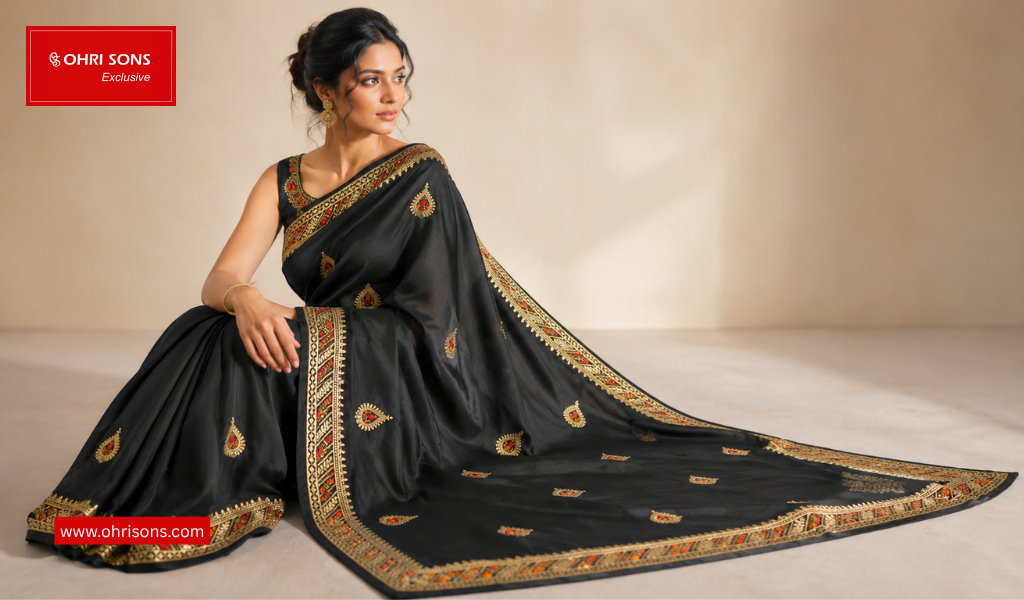
What Is an Embroidered Saree? Types, Fabrics & Occasions Explained
An embroidered saree is a traditional Indian saree that features decorative needlework stitched directly onto the fabric, either by hand or machine, using threads, beads, sequins, mirrors, or metallic wires. It’s one of the most timeless ways to wear Indian heritage, and no two embroidered sarees ever look quite the same.
Whether you’re dressing for a wedding, a festive puja, or even an elegant office gathering, there’s an embroidered saree for every woman and every mood. In this guide, we’ll walk you through the main types, the best fabrics, and exactly which style works for which occasion, so you can shop (and dress) with confidence.
What Makes a Saree “Embroidered”?
At its heart, embroidery is the art of decorating fabric with a needle and thread. On sarees, this art appears in the border (called the kinari), across the body of the saree, on the pallu (the draped end), or sometimes all three.
The embroidery can be:
- Hand-done — crafted stitch by stitch by artisans, often taking days or weeks per saree
- Machine-embroidered — faster to produce, more affordable, with a more uniform look
- Combination — machine base with hand-finishing details
Hand-embroidered sarees carry more value, both monetarily and culturally, because each piece holds the skill and patience of a real craftsperson. When you buy one, you’re not just buying fabric; you’re wearing someone’s art.
Types of Embroidered Sarees in India
India’s embroidery traditions are as diverse as its states. Here are the most popular and widely loved styles:
-
Chikankari Embroidery Sarees
Chikankari originates from Lucknow, Uttar Pradesh, and is one of the most graceful embroidery styles in existence. The work is typically done on light fabrics like georgette, cotton, or mul-mul using white thread, creating delicate floral and leaf patterns.
Chikankari sarees are ideal for summer, daytime events, office wear, and casual get-togethers. They’re soft, breathable, and effortlessly elegant, never overdone.
-
Zari Embroidery Sarees
Zari refers to metallic thread, usually gold or silver, woven or stitched into the fabric. You’ll find heavy Zari work on Banarasi and Kanjivaram sarees, making them a staple for weddings and grand celebrations.
If you want to look like royalty at a reception or wedding ceremony, a Zari-embroidered saree is your answer.
-
Kantha Embroidery Sarees
Kantha comes from Bengal and Bihar. Traditionally, women used to stitch together layers of old saris using a simple running stitch, creating a slightly quilted texture. Today, Kantha embroidery on sarees features vibrant storytelling motifs, birds, animals, village scenes, using colourful threads.
These sarees have a very earthy, artisanal feel and are perfect for cultural events, literary gatherings, or days when you want to make a quiet but meaningful statement.
-
Phulkari Embroidery Sarees
Phulkari means “flower work” in Punjabi, and that’s exactly what this embroidery is, a burst of colourful floral patterns stitched in silk thread, usually on cotton or georgette fabric. The colours are bold and joyful: red, yellow, orange, pink.
Phulkari sarees are festive, energetic, and absolutely stunning for weddings, Lohri, Baisakhi, or any celebration where you want to stand out.
-
Aari (Zardozi) Embroidery Sarees
Aari work is done using a hooked needle that pulls thread from below the fabric. When gold and silver threads, pearls, and stones are added, the style becomes Zardozi, one of the most opulent embroidery forms in India.
Aari and Zardozi sarees are statement pieces for weddings, receptions, and cocktail evenings. They’re heavy, glamorous, and designed to make people look twice.
-
Gota Patti Embroidery Sarees
From Rajasthan, Gota Patti uses ribbons of real or imitation gold and silver fabric that are appliquéd (stitched flat) onto the saree. The result is a rich, layered, textured look that catches the light beautifully.
These sarees are perfect for Rajasthani weddings, mehndi ceremonies, and festive occasions where you want old-world charm with a modern edge.
-
Mirror Work (Shisha) Embroidery Sarees
Popular in Gujarat and Rajasthan, Shisha embroidery involves stitching tiny mirrors onto the fabric surrounded by colourful thread. The effect is dazzling, every step you take, the mirrors catch the light.
Mirror work sarees are brilliant for Navratri, festive parties, or beach weddings where the setting matches the sparkle.
Best Fabrics for Embroidered Sarees
The fabric is just as important as the embroidery itself — it determines how the saree drapes, how it feels against your skin, and how long the embroidery lasts.
|
Fabric |
Why It Works | Best Embroidery Style |
| Georgette | Flows beautifully, lightweight, holds embroidery well | Chikankari, Aari, Phulkari |
| Organza | Sheer and glossy, gives embroidery a “floating” look | Zardozi, Resham thread work |
| Silk | Rich drape, reflects light, premium feel | Zari, Kantha, Banarasi work |
| Cotton | Breathable, great for daily and summer wear | Kantha, Chikankari |
| Net | Gives depth to heavy embroidery work | Aari, mirror work, Zardozi |
Which Embroidered Saree for Which Occasion?
Choosing the right embroidered saree for the right occasion makes all the difference. Here’s a simple way to think about it:
Weddings & Receptions → Heavy embroidery like Zardozi, Gota Patti, or Zari on silk or organza. Go rich, go bold.
Festive occasions (Navratri, Diwali, Eid) → Phulkari, mirror work, or light Zari. Colours should be vibrant and celebratory.
Mehndi & Sangeet → Gota Patti or Phulkari in pastels or yellows. Fun, festive, easy to dance in.
Office & formal settings → Light Chikankari on georgette or cotton. Sophisticated but not overdressed.
Cultural events & casual outings → Kantha embroidery or simple thread work. Artisanal, conversation-starting, easy to carry.
Evening parties & cocktails → Aari work or heavy sequin embroidery on net or organza. Dramatic and memorable.
How to Care for Your Embroidered Saree
Embroidered sarees deserve a little extra love. A few simple habits will keep your saree looking as beautiful as the day you bought it:
- Always dry clean heavy embroidered sarees (Zardozi, Zari) — water can loosen threads and distort the work
- For lighter sarees (Chikankari, Kantha), gentle hand wash in cold water works fine
- Never wring or twist — lay flat or hang to dry in shade
- Iron on reverse side only, or place a thin cloth between the iron and embroidery
- Store folded in muslin cloth, not plastic — fabric needs to breathe
Final Thoughts
An embroidered saree isn’t just clothing, it’s a piece of cultural artistry that has been passed down through generations. Whether you’re drawn to the delicate whisper of Chikankari, the golden grandeur of Zardozi, or the joyful riot of Phulkari colours, there is an embroidered saree that was made for you.
The next time you’re shopping, look beyond the colour. Look at the stitch. Feel the fabric. Ask where the embroidery comes from. Because when you wear a saree with that kind of intention, it shows, and you’ll carry it beautifully.
FAQ’s
Q1. What is the difference between hand-embroidered and machine-embroidered sarees?
Hand-embroidered sarees are stitched by artisans and often have slight irregularities that are actually a sign of authenticity and quality. Machine-embroidered sarees look more uniform and are more affordable. If you look at the back of the fabric, hand embroidery usually shows a cleaner, more intentional thread pattern underneath.
Q2. Which embroidered saree is best for a wedding?
For a wedding, Zardozi, Zari, or Gota Patti embroidered sarees are the top choices. They’re heavy, ornate, and designed to make an impression. If you’re a guest rather than the bride, opt for something slightly lighter, a Phulkari or Aari work saree keeps you festive without outshining the couple.
Q3. Can I wear an embroidered saree to the office?
Absolutely, as long as you choose the right style. Light Chikankari sarees on cotton or georgette are perfectly office-appropriate. Avoid heavy Zardozi or mirror-work for professional settings; save those for evenings.
Q4. How do I know if an embroidered saree is good quality?
Check the back of the saree, the threads should be neatly carried across, not just knotted. The embroidery should feel secure when gently tugged. For Zari work, real zari threads won’t tarnish quickly. And always ask the seller whether the embroidery is hand-done or machine-made, a good seller will always know.
Q5. Which fabric is most comfortable for an embroidered saree in summer?
Cotton and georgette are your best friends in summer. Chikankari on mul-mul cotton or light georgette is breathable, skin-friendly, and still looks beautiful. Avoid heavy silk or net in peak summer, they can feel warm and stiff.