
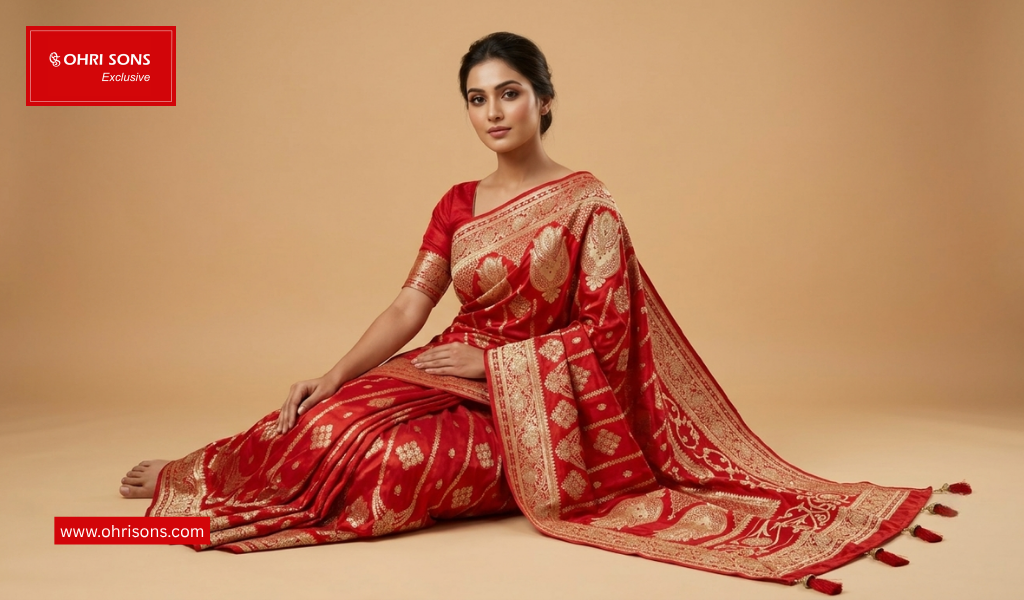
How to Identify a Pure Banarasi Silk Saree: 10 Easy Checks Before You Buy
There’s something special about a Banarasi saree. It isn’t just another outfit sitting in your wardrobe, it carries memories. It might remind you of your mother’s wedding album, a festive celebration at home, or the excitement of shopping for your own big day. For generations, Banarasi sarees have represented grace, tradition and timeless Indian craftsmanship.
But today, buying an authentic one isn’t as easy as walking into a store and picking your favourite colour. With machine-made copies and synthetic fabrics looking almost identical to the real thing, many buyers end up paying for a saree that only looks like Banarasi silk.
If you’re planning to buy Banarasi Sarees online or visit a showroom, a little knowledge can help you make the right choice. You don’t have to be a textile expert. By paying attention to a few simple details, you can easily tell whether you’re investing in genuine Banarasi Silk Sarees or an imitation.
Here are ten practical checks every buyer should know before bringing home a Banarasi saree.
1. Let Your Hands Decide First
Before looking at the design or the price tag, touch the fabric.
Pure Banarasi silk has a rich, smooth texture that feels luxurious without being slippery. It has a certain warmth in the hand, unlike polyester or artificial silk, which often feels cold or overly glossy.
A simple trick many experienced shoppers follow is to gently crumple a small section of the pallu. Genuine silk naturally springs back with very light creases, while synthetic fabrics either remain stiff or wrinkle differently.
If you’re shopping online, zoom into the product images and read the fabric description carefully. Reputed sellers usually mention whether the saree is made from pure silk, Katan silk, organza silk or silk blends instead of simply calling it “Banarasi.”
2. Don’t Ignore the Reverse Side
One of the easiest ways to identify authentic Banarasi Sarees is by turning them over.
Handwoven Banarasi sarees often reveal small floating threads behind the motifs. These threads are not flaws—they’re actually signs that skilled artisans have woven every design on the loom instead of printing it onto the fabric.
Machine-made sarees generally have a perfectly clean back because the pattern is created differently. While the reverse side may not look as attractive, it tells you a lot about how the saree has been made.
Whenever you’re shopping in a store, ask to see the back of the saree. A genuine seller will happily show it to you.
3. Look Closely at the Motifs
Banarasi weaving is famous for its intricate craftsmanship.
Take a closer look at the floral vines, paisleys, butis or Mughal-inspired motifs woven into the saree. The finer the detailing, the more skill has gone into creating it.
You’ll often notice tiny imperfections in handwoven designs. Surprisingly, that’s a good thing. Handmade textiles are rarely identical because every inch is woven manually. Machine-made sarees, on the other hand, usually have perfectly uniform patterns throughout.
These small differences are what make every authentic Banarasi saree unique.
4. The Shine Should Be Elegant, Not Loud
Many buyers assume that the shinier the saree, the better the quality. That’s one of the biggest misconceptions.
Pure silk doesn’t have an artificial sparkle. Instead, it reflects light softly and changes its appearance depending on the angle. Walk a few steps with the saree under natural light, and you’ll notice the colour and sheen subtly shift.
Synthetic fabrics often have a plastic-like shine that remains exactly the same from every angle.
This natural glow is one of the reasons why Banarasi sarees look stunning in wedding photographs and festive celebrations without appearing flashy.
5. Pay Attention to the Zari Work
One of the biggest highlights of a Banarasi saree is its zari. Whether it’s a broad border, a richly woven pallu or delicate butis spread across the fabric, the zari should look like it’s part of the weave—not something added later.
Run your fingers gently over the design. In a well-crafted Banarasi saree, the motifs feel woven into the fabric rather than sitting on top of it. The detailing should be neat, balanced and consistent from one end of the saree to the other.
Today’s Banarasi sarees may use different types of zari, but quality craftsmanship always stands out. If the metallic thread starts peeling, looks uneven or appears printed instead of woven, it’s worth taking a second look before buying.
6. Check the Weight—But Don’t Judge by It Alone
There’s a common belief that heavier means better. While many traditional Banarasi Silk Sarees do have a rich drape because of the silk and zari work, weight alone isn’t proof of authenticity.
Modern weaving techniques have introduced lightweight Banarasi sarees that are perfect for summer weddings, festive gatherings and long celebrations. These are comfortable to wear for hours without compromising on elegance.
Instead of relying only on weight, consider it along with the fabric quality, weave, finish and overall craftsmanship.
7. Look for Fine Weaving Along the Border and Pallu
If there’s one area that reveals the quality of a Banarasi saree, it’s the border and pallu.
Take a close look at the weaving. Are the motifs sharp? Do the floral vines flow smoothly? Is the pattern symmetrical?
An authentic Banarasi saree reflects the patience of skilled artisans. Even the smallest details are carefully woven, giving the saree a refined finish.
In contrast, poorly woven sarees often have irregular borders, incomplete motifs or visible weaving inconsistencies that affect the overall appearance.
8. Ask About the Silk Mark Certification
If you’re investing in a premium silk saree, don’t hesitate to ask questions.
Many reputed sellers offer Banarasi silk sarees with a Silk Mark certification, which helps buyers identify genuine silk products. While every authentic saree may not carry this label, sellers dealing in quality silk are generally transparent about the fabric composition, weaving style and product origin.
A trustworthy seller will happily explain the difference between pure silk, silk blends and other fabric options instead of giving vague answers.
9. Buy from a Seller You Can Trust
Whether you’re shopping in a traditional store or planning to buy Banarasi Sarees online, choosing the right seller is just as important as choosing the saree itself.
A reliable retailer usually provides:
- Clear fabric details
- Multiple product images
- Close-up shots of the weave
- Transparent pricing
- Easy exchange or return policies
- Genuine customer reviews
If the product description is incomplete or the seller avoids answering questions about the fabric, it’s better to explore other options.
When you order Banarasi Sarees from a trusted brand, you’re not only getting better quality but also greater peace of mind.
10. If the Price Looks Too Good to Be True, It Probably Is
Every genuine Banarasi saree represents days—and sometimes weeks—of skilled hand weaving.
Naturally, such craftsmanship comes at a price.
This doesn’t mean every authentic Banarasi saree has to be extremely expensive. There are beautiful options available across different budgets. However, if a seller claims to offer “pure Banarasi silk” at an unbelievably low price, it’s wise to ask why.
Instead of chasing the biggest discount, focus on value. A well-made Banarasi saree isn’t just another purchase; it’s something you can wear for years and even pass on to the next generation.
Mistakes First-Time Buyers Often Make
Buying a Banarasi saree can feel overwhelming, especially if it’s your first purchase. Many shoppers get carried away by attractive colours or festive discounts and overlook the details that truly matter.
Here are a few mistakes worth avoiding:
- Buying solely because of a heavy discount.
- Confusing artificial shine with pure silk.
- Ignoring the reverse side of the weave.
- Not reading the fabric description while shopping online.
- Choosing an unknown seller without checking reviews.
- Assuming every Banarasi saree is handwoven.
A few extra minutes of research can help you make a purchase you’ll never regret.
Why an Authentic Banarasi Saree Is Always Worth It
Fashion trends change every season, but Banarasi sarees continue to hold a special place in every Indian wardrobe.
They’re worn by brides on their wedding day, gifted to daughters during festivals, chosen for anniversaries, family functions and celebrations that become lifelong memories. Unlike fast fashion, a genuine Banarasi saree doesn’t lose its charm after a few wears. In fact, many become treasured heirlooms passed down from one generation to the next.
When you choose authentic craftsmanship, you’re also supporting the skilled artisans who have preserved this centuries-old weaving tradition with incredible dedication.
So, the next time you plan to buy Banarasi Sarees online or visit a showroom to order Banarasi Sarees, remember these simple checks. They will help you choose a saree that’s not only beautiful but also authentic, durable and truly worth every rupee you spend.
FAQ’s
- How can I tell if a Banarasi saree is pure silk?
Check the fabric texture, reverse-side weaving, zari work, natural sheen and seller details. Genuine Banarasi Silk Sarees have fine craftsmanship and feel soft, rich and elegant compared to synthetic alternatives. - Is it safe to buy Banarasi Sarees online?
Yes. You can safely buy Banarasi Sarees online from trusted brands that provide clear fabric information, multiple product images, customer reviews and easy return policies. - Why are authentic Banarasi Silk Sarees expensive?
Authentic Banarasi Silk Sarees are handwoven by skilled artisans using premium silk and intricate weaving techniques. The craftsmanship, time and quality involved make them a long-lasting investment rather than a regular fashion purchase.