
Types of Handloom Sarees in India: A Complete Guide to Buy Online
If you have ever run your fingers over a handloom saree and felt that slight unevenness in the weave, you already know what makes it special. That small imperfection is not a flaw. It is proof that a real person sat at a loom, thread by thread, and gave hours of their life to create something you can now wear. In a world where everything is mass produced, handloom sarees are one of the few things left that still carry a human touch.
If you are planning to buy handloom sarees online, it helps to first understand what you are actually choosing between. India has one of the richest handloom traditions in the world, and almost every state has its own signature weave, its own story, and its own reason to be in your wardrobe. Let us walk through the major types so you know exactly what to look for.
What Makes a Saree “Handloom”
Before we get into the types, it is worth knowing what separates a handloom saree from a regular one. A handloom saree is woven manually on a hand operated loom, not on a power driven machine. This means the weaver controls every pick of the shuttle, every tension in the thread, and every small design detail by hand.
Because of this, handloom sarees often have tiny irregularities in the weave, a slightly heavier feel, and a texture that machine made fabric simply cannot copy. Many also carry a Handloom Mark or a GI tag, which is the easiest way to confirm authenticity when you buy saree online.
Popular Types of Handloom Sarees You Can Buy Online
Banarasi Saree
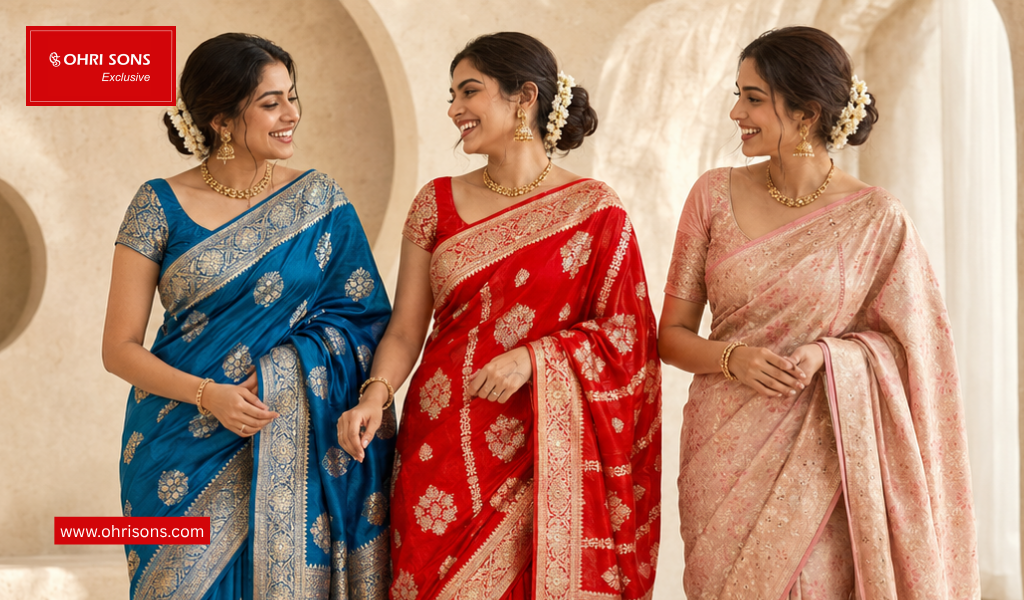
No conversation about Indian weaves is complete without the Banarasi saree. Woven in and around Varanasi, these sarees are known for their rich zari work, silk base, and Mughal inspired floral motifs. A Banarasi saree online is often the first choice for weddings and festive occasions because of how luxurious it looks under any light.
Kanjeevaram Saree
Coming from Tamil Nadu, the Kanjeevaram is a heavy silk saree known for its contrasting borders and temple inspired designs. It is thick, durable, and can genuinely last generations if cared for properly. Brides across South India still consider it a must have.
Chanderi Saree
Chanderi sarees from Madhya Pradesh are the opposite of heavy. They are light, sheer, and have a soft shimmer thanks to the mix of silk and cotton yarns. If you want something festive but not overwhelming, Chanderi is worth considering.
Jamdani Saree
Jamdani, mostly woven in West Bengal, is famous for its intricate patterns that look almost hand embroidered but are actually woven directly into the fabric. It is one of the most technically demanding weaves in the country, which is why authentic Jamdani sarees are treated as heirloom pieces.
Tussar Silk Saree
Tussar comes from wild silk and has a natural, slightly textured gold tone. It is breathable, making it a good pick for daytime functions or warmer weather. It also has a rustic, earthy appeal that pairs well with minimal styling.
Ikat Saree
Ikat is not a place, it is a technique. The yarns are tie dyed before weaving, which creates those distinctive blurred, geometric patterns you often see on sarees from Odisha and Telangana. It is bold, modern looking, and works well for both office wear and casual outings.
Maheshwari Saree
From the banks of the Narmada in Madhya Pradesh, Maheshwari sarees are known for their reversible borders and a fabric that blends cotton and silk. They are lightweight and comfortable, making them a practical choice for daily or office wear.
Sambalpuri Saree
Sambalpuri sarees from Odisha use a similar tie dye technique to Ikat but are distinct in their traditional motifs like shankha, chakra, and phula. They carry deep cultural symbolism and are often chosen for festive and ceremonial occasions.
Pochampally Saree
Also known as Ikat from Telangana, Pochampally sarees are recognized by their geometric diamond patterns. They received GI tag recognition for their unique weaving style and are a popular choice among women who like a contemporary look rooted in tradition.
Muga Silk Saree
Muga silk from Assam is rare and prized for its natural golden sheen that actually gets richer with every wash. It does not fade easily and is considered one of the more premium handloom silk sarees you can own.
How to Buy Handloom Sarees Online Without Getting Fooled
With so many sarees online claiming to be handloom, it helps to know what to check before you buy.
Look closely at the weave. Genuine handloom fabric usually has slight irregularities, unlike the perfectly uniform pattern of power loom sarees. Check for a Handloom Mark or GI tag wherever applicable, since this is an official authenticity indicator. Feel the fabric. Handloom sarees generally have more texture and weight compared to machine made ones. And always buy from a saree shop or online sarees for women platform that is transparent about sourcing and weaving details, rather than one that just uses the word handloom as a marketing label.
Styling Handloom Sarees for Different Occasions
One of the best things about handloom weaves is how versatile they are. A Banarasi saree or a heavier silk saree works beautifully for weddings and party wear sarees occasions, especially when paired with statement jewelry. For daily wear or office settings, lighter weaves like Chanderi, Maheshwari, or handloom cotton feel far more comfortable through long hours. If you are hunting for wedding wear sarees online, prioritize the heavier silk and zari heavy weaves like Kanjeevaram or Banarasi, since they naturally photograph and drape better for big occasions.
Why Choose Ohri Sons Exclusive
At Ohri Sons Exclusive, we bring together this entire spectrum of Indian weaving traditions under one roof. Whether you are looking for embroidered sarees, printed sarees, organza saree options, or classic silk sarees online, our collection is built around authenticity and craftsmanship first. Every piece reflects the same values that generations of Indian weavers have carried forward, quality that lasts, patterns that tell a story, and a drape that never goes out of style.