
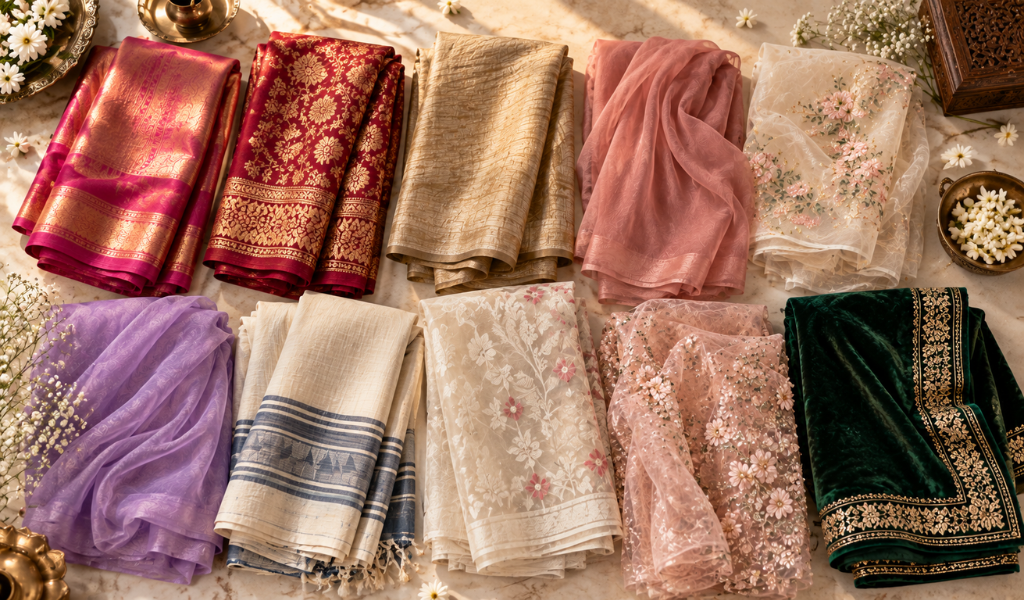
Most people pick a saree by looking at the colour and the print first, and only think about the fabric once it’s already in their cart. That’s usually where the trouble starts. A saree that looked stunning on screen can turn out too heavy for the weather, too sheer for the occasion, or just not what you expected once it’s in your hands.
Fabric is really the first decision, not the last one. It determines how the saree sits on you, how it holds up over a long function, and whether it needs a dry cleaner or just a regular wash. This piece goes through the fabrics you’re most likely to come across while shopping for a saree, what each one is actually good for, and how to look after it once you’ve bought it.
Why Fabric Matters More Than You’d Think
Two sarees can look nearly identical in a photo and behave completely differently once worn. One might crease the moment you sit down; the other might hold its shape all evening. One might be light enough for a humid outdoor wedding; the other might have you sweating through the reception.
Getting the fabric right means:
- You’re not stuck adjusting pleats all evening because the drape isn’t holding
- You know roughly what you should be paying, and why some sarees cost more than others
- You’re not caught off guard by the weight or texture when the parcel arrives
- The saree survives more than one wear and one wash
If you’re choosing between party wear sarees, wedding wear sarees, or something simpler for a regular festive day, the fabric is where that decision actually starts.
The 10 Saree Fabrics You’ll Come Across
1. Silk
Silk is still what most people picture when they think “wedding saree.” It has real weight to it, a natural sheen rather than a plastic-looking shine, and it holds embroidery and zari work far better than lighter fabrics do. Banarasi, Kanjeevaram, and tussar all fall under the silk umbrella, and each has its own weave and finish. If you’re looking at silk sarees online for a wedding or a big festive occasion, this is usually where the budget goes.
Best for: Weddings, festive sarees, formal events
2. Banarasi Silk
Banarasi deserves its own mention outside the general silk category, because it isn’t just silk — it’s silk woven a specific way. The zari work is woven directly into the fabric rather than added on top, which is why an old Banarasi saree can still look sharp decades later while the embroidery on other fabrics has long since frayed. It’s heavier than most silk sarees and holds a stiffer drape, so it’s not something you’d want to wear for a full day of standing and moving around, but for the actual ceremony, nothing photographs quite like it.
Best for: Weddings, Diwali, ceremonies where you’re mostly sitting or standing for photos
3. Tussar Silk
Tussar is the quieter cousin of Banarasi — same silk family, completely different personality. It has a natural, slightly textured surface and a muted, earthy sheen instead of the high-gloss shine most people associate with silk. It’s also noticeably lighter and cooler to wear, which makes it one of the few silk options you can actually get through a daytime function in without overheating.
Best for: Day weddings, semi-formal events, anyone who wants silk without the weight
4. Georgette
Georgette has a slight crinkle to it and moves well when you walk, which is why it turns up so often in party wear sarees. It doesn’t crush easily if you’re sitting through a long function, and it takes both prints and embroidery without any trouble.
Best for: Parties, evening functions, semi-formal wear
5. Organza
Organza has a crisp, almost structured feel to it, and it’s become a lot more common over the last few years. An organza saree online will usually have some thread work, cutdana, or floral detailing on it, and it still looks festive without feeling heavy on the body. It’s a reasonable middle ground if you want something rich-looking without the warmth of silk.
Best for: Festive sarees, day weddings, receptions
6. Chiffon
Chiffon is soft, fairly forgiving to drape, and often what’s recommended to someone wearing a saree for the first time. It sits close to the body without clinging awkwardly, and it breathes reasonably well in warmer weather.
Best for: Everyday festive wear, office parties, summer functions
7. Cotton
Cotton is the most practical fabric on this list. Cotton sarees breathe well, wash easily, and cost less than most of the alternatives here. They’re not the ones you’d pick for a wedding, but for daily wear, work, or a low-key festive day, cotton is usually the right call.
Best for: Daily wear, office wear, summer
8. Handloom (Jamdani)
Handloom sarees are woven by hand rather than machine, and Jamdani is the one you’ll come across most often — a fine cotton or cotton-silk base with the pattern woven directly into it rather than printed or embroidered on. No two handloom pieces are ever quite identical, which is part of the appeal if you want something that doesn’t look mass-produced. It’s breathable enough for daytime wear but still has enough texture to feel festive.
Best for: Festive daywear, cultural events, anyone who prefers artisanal over embellished
9. Net
Net is the fabric behind most of the heavily embellished, dramatic-looking party sarees — it’s sheer, holds sequin and stonework well, and gives that layered, voluminous look you see on statement pieces. It’s rarely worn plain; net sarees almost always come with embroidery or embellishment built into the base fabric itself. It’s not the most comfortable option for a long event since it doesn’t breathe much, but for a shorter evening function, it earns its place.
Best for: Cocktail parties, receptions, sangeet nights
10. Velvet
Velvet is the outlier on this list — it’s the one fabric here that actually works better in the cold than the heat. It has a soft, plush texture and rich colour depth that other fabrics can’t quite match, which is why it shows up so often in winter wedding season. It’s warm to wear, which is exactly the point in December, but it’s also heavier and needs more careful storage than anything else on this list.
Best for: Winter weddings, reception looks, cooler-weather festive occasions
Which Fabric Works for Which Season
- Summer (March–June): Cotton, chiffon, and lighter georgette are the most bearable in the heat.
- Monsoon (July–September): Georgette and net cope better with humidity without going limp or clinging.
- Festive and wedding season (October–February): Silk, Banarasi, organza, and velvet suit the cooler weather and the occasion.
Worth checking the venue too, not just the season — a daytime outdoor wedding is a better fit for something lighter like organza or tussar, while an evening reception can easily carry a heavier silk, Banarasi, or velvet.
Price Range Comparison Table
| Fabric | Typical Price Range | Best Occasion |
|---|---|---|
| Cotton | ₹800 – ₹2,500 | Daily wear, office, casual festive |
| Chiffon | ₹1,200 – ₹3,500 | Office parties, summer functions |
| Handloom (Jamdani) | ₹1,800 – ₹6,000 | Festive daywear, cultural events |
| Georgette | ₹1,500 – ₹5,000 | Parties, semi-formal events |
| Net | ₹2,000 – ₹7,000 | Parties, receptions |
| Organza | ₹2,500 – ₹8,000 | Festive wear, day weddings |
| Tussar Silk | ₹2,500 – ₹9,000 | Day weddings, semi-formal events |
| Velvet | ₹3,500 – ₹15,000 | Winter weddings, receptions |
| Silk (Kanjeevaram/general) | ₹3,500 – ₹25,000+ | Weddings, festive sarees, formal occasions |
| Banarasi Silk | ₹4,000 – ₹30,000+ | Weddings, ceremonies |
Prices vary based on embroidery, zari work, and craftsmanship, handloom sarees and heavily embellished pieces will naturally sit at the higher end.
Care Tips for Each Fabric
- Silk: Dry clean only. Store wrapped in muslin cloth, away from direct light, to prevent the zari from tarnishing.
- Banarasi Silk: Dry clean only. Fold along soft lines rather than sharp creases to protect the zari; avoid hanging for long periods as the weight can stretch the weave.
- Tussar Silk: Dry clean preferred, though a gentle hand wash works occasionally. Iron on low heat, high heat flattens its natural texture.
- Georgette: Hand wash in cold water or dry clean if heavily embroidered. Hang dry, away from direct sunlight.
- Organza: Dry clean recommended, especially with embellishments. Store flat or loosely folded to avoid creasing the crisp texture.
- Chiffon: Gentle hand wash works well. Iron on low heat with a cloth in between to protect the fabric.
- Cotton: Machine washable on a gentle cycle. Starch lightly for a crisp drape, and iron while slightly damp for the best finish.
- Handloom (Jamdani): Hand wash in cold water for cotton-based pieces; dry clean for silk-cotton blends. Store folded, not hung, to avoid stress on the handwoven threads.
- Net: Dry clean only, especially with embellishment. Store flat, never folded tightly, creases in net don’t come out easily.
- Velvet: Dry clean only. Store hanging in a breathable garment bag, away from moisture, since velvet attracts dust and can flatten if compressed.
Most of the damage to a saree happens in storage, not while wearing it, so it’s worth getting this part right.
FAQ’s
1. Which saree fabric is best for a wedding?
2. What is the most comfortable saree fabric for daily wear?
3. How do I know if a saree is pure silk or synthetic?
4. Which saree fabric is best for summer weddings?
5. Can georgette sarees be worn for festive occasions?