
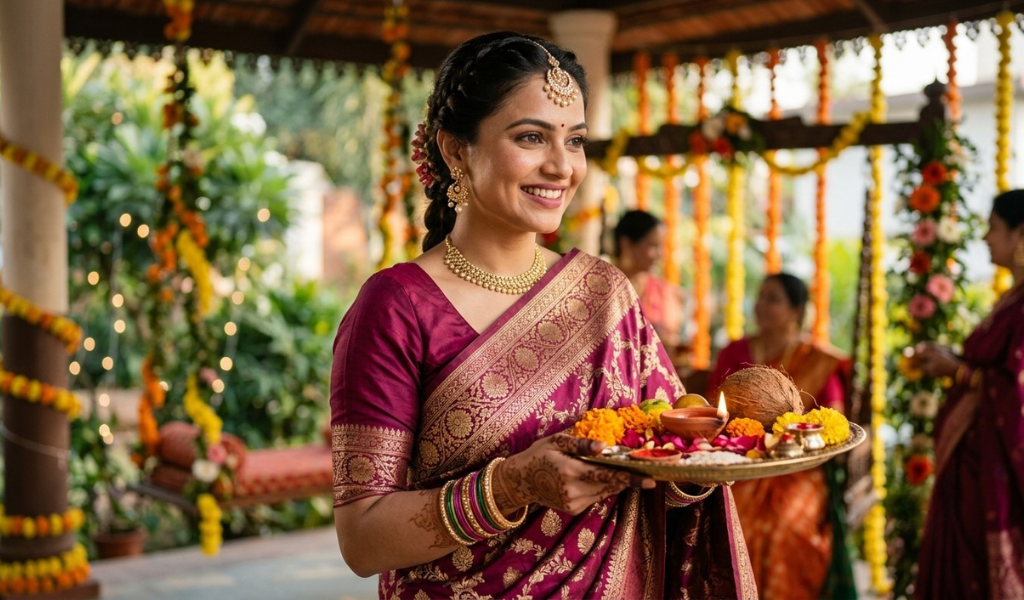
Teej is almost here, and if you’re anything like most of us, your wardrobe planning probably started a week ago and you’re still not done. Somewhere between the mehendi bookings and figuring out the puja timings, there’s this one question that keeps coming up in every group chat. Banarasi or Kanjivaram, which one actually makes sense for Teej?
Both are gorgeous, no argument there. Both have centuries of tradition behind them too. But Teej isn’t your average festival where you sit pretty for two hours and go home. There’s swinging on jhulas, standing through long pujas, walking around meeting relatives you haven’t seen in months. So the real question isn’t just which saree looks better. It’s which one actually lets you enjoy your day.
Why This Even Needs Comparing
If Teej was just about looking good for a couple of photos, this debate wouldn’t matter much. But it’s not. You’re on your feet for hours, you’re moving around, sometimes literally swinging back and forth on a jhula in six yards of fabric. What you wear needs to hold up to all of that without you constantly tugging at your pallu or feeling like you’re carrying extra weight around your waist by evening.
That’s really where the Banarasi versus Kanjivaram question starts to matter beyond just aesthetics.
The Banarasi Saree, Briefly
Coming from Varanasi, the Banarasi saree carries weaving traditions that go back centuries. The zari work, the gold and silver brocade, motifs that borrow heavily from Mughal-era art, all of it comes together to make something that instantly feels festive the moment you put it on.
What’s nice about Banarasi sarees is the range. You get everything from lightweight organza versions to heavier pure silk ones, so there’s usually something that fits how you actually plan to spend your day. And the colours, honestly, this is where it wins for Teej specifically. Deep reds, royal greens, warm pinks, traditional golds, exactly the palette this festival calls for.
If you’ve been eyeing festive sarees online or even something from the wedding sarees category but want it to feel rooted in tradition rather than just trendy, Banarasi tends to hit that balance well.
The Kanjivaram Saree, Briefly
Kanjivaram, or Kanchipuram silk if you want to be precise, comes from Tamil Nadu and is known for being one of the heaviest, most durable silk weaves around. The texture is different, denser, with those bold temple border designs that you can spot from across a room.
There’s a certain grandeur to it that’s hard to deny. It feels like it was made for big, formal weddings, the kind where you’re mostly seated and being photographed rather than moving around much. But that same weight and density, which makes it so striking, is also what makes it a slightly less practical pick for something like Teej.
Okay, So Let’s Actually Compare Them
Comfort and Weight
This one’s not close, honestly. Lighter Banarasi weaves, especially organza, are far easier to wear through a long day than a Kanjivaram, which can start feeling heavy by the second or third hour.
Monsoon Weather
Teej usually falls right in the middle of monsoon season, so humidity is a real factor. Lighter Banarasi fabric breathes better. Dense Kanjivaram silk, not so much, it can feel warm and a bit sticky if the weather’s playing up.
Festive Colours
Kanjivaram does come in some lovely traditional shades, no denying that. But Banarasi just has a wider spread of the specific greens, pinks, and reds that Teej is associated with.
Draping Through The Day
Lighter fabric means easier re-draping and adjusting, which matters more than people expect once you’ve been sitting, standing, and moving for hours.
Price
Both have a wide range depending on weave and material. But if you’re trying to buy sarees online without going overboard on budget, a Banarasi in organza or a lighter silk blend usually gives you that festive richness without the Kanjivaram price tag.
So Which One Wins?
For Teej specifically, Banarasi edges ahead, and it’s not really close once you factor in comfort. It gives you the festive, traditional look without making you regret your choice by the third hour of celebrations.
That said, if you genuinely care more about heirloom value and grandeur than comfort for this one occasion, Kanjivaram still holds its own. There’s no wrong answer here, just different priorities.
For most people though, when the goal is to buy a Banarasi saree online for Teej, the mix of tradition, comfort, and practicality makes it the easier pick.
One Last Thing
Teej is really about togetherness and a bit of festive indulgence. Whatever you end up choosing, the most important part is that you’re comfortable enough to actually enjoy the day instead of fighting with your outfit. If you do go with a Banarasi saree, look for handloom or organza options in festive colours, they’ll carry you through the whole celebration without any fuss.
Take a look through our Banarasi saree collection and find the one that feels right for your Teej this year.
FAQ’s on Best Saree for Teej