
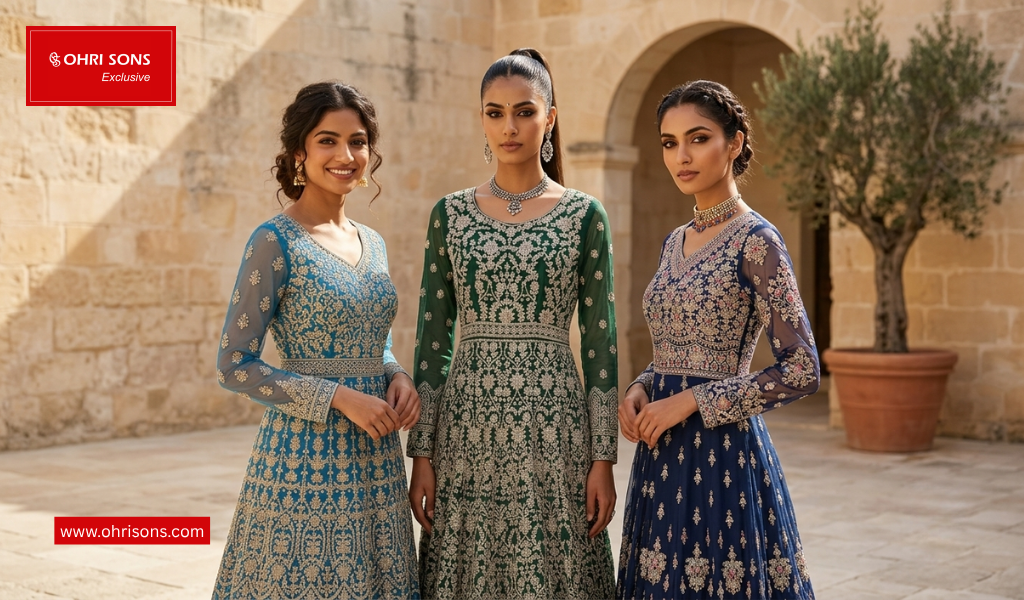
Anarkali Suits Buying Guide: How to Choose the Perfect Fit, Fabric & Style for Every Occasion
There’s something about an Anarkali suit that just does more than other outfits. The second it flares out from the waist and falls in that long, sweeping line, it turns whatever the occasion is into something worth remembering. A best friend’s mehendi, a cousin’s wedding, even a small puja at home, the Anarkali has a way of making you feel put together without trying too hard.
The catch is the sheer number of choices. Georgette or silk. Floor-length or calf-length. What actually works for your build. If you’ve been putting off a purchase because it all feels like too much, this guide should make things easier before you buy Anarkali online.
What Makes an Anarkali Suit Different
A straight-cut suit sits close to the body. An A-line kurti flares a little below the hip. An Anarkali does neither, it has a fitted bodice on top and then flares out dramatically, almost like an umbrella. The name comes from Mughal-era court fashion, and that royal, dramatic quality still shows in the way the outfit moves when you walk or twirl.
That movement is exactly why Anarkalis keep showing up at weddings, festive functions, and even low-key evening get-togethers. Most women who search to order Anarkali suits online are chasing that same thing, an outfit that feels rooted in tradition but still looks current.
Finding the Right Fit for Your Body
There’s no wrong body for an Anarkali, the flare is forgiving by design. But a few adjustments go a long way.
If you’re petite, go for a fitted bodice with the flare starting right at the waist. Keep embroidery or prints higher up, near the chest and shoulders, so the eye travels upward. If you’re curvier, a princess-cut Anarkali with vertical panels does a lot of the work for you, skimming past the waist and hips instead of clinging. Taller women can get away with heavier flares, floor-length hems, and bold borders without the outfit overwhelming them. And if you’ve got a smaller bust or broader shoulders, a structured yoke with well-placed embroidery can even things out.
None of this is about fixing anything. It’s about picking a cut that already works with what you have.
Fabric Guide: Picking What Feels Right for the Occasion
The fabric decides more than the look, it decides how the outfit actually feels on you through a long day of functions.
Georgette is light and moves easily, which makes it a natural pick for sangeet nights or any outdoor event where you’ll be dancing.
Silk brings a rich, regal sheen that instantly elevates any wedding-day look, ideal for the bride’s family or anyone wanting a grander, more traditional appeal.
Organza has had a real moment in festive fashion lately. It holds its shape while still looking delicate, especially with sequin or thread work.
Velvet works best in winter, it’s warm, heavy in a good way, and gives the whole outfit a richer, more royal feel.
Cotton is the practical choice for daytime events, casual festive wear, or a simple puja, comfortable without losing that festive touch.
At the end of the day, it comes down to what the occasion calls for, something fun and easy, or something more elegant and formal.
Matching the Anarkali to the Occasion
For haldi and mehendi, stick to light georgette or cotton in yellows, oranges, or pastels, something you can actually dance in without worrying.
Wedding day calls for silk or velvet with proper zari, gota, or embroidery work, in deep reds, maroons, or jewel tones that hold up well in photos. If you’re the bride and weighing other options too, our [Link: Bridal & Wedding Wear Lehenga Collection] has more to browse.
For the reception, a floor-length organza or net Anarkali with light sequin work gives you that soft evening glow without going over the top. If a lehenga fits the vibe better, check our [Link: Readymade Lehenga Collection].
For festive days and pujas, a cotton or silk-blend Anarkali in warmer, traditional colours holds up through long hours without feeling like too much.
And for party wear, go shorter, calf-length, contemporary prints or pastels work well for a relaxed evening.
A Few Styling Notes
Drape the dupatta over one shoulder for something more modern, or let it fall freely at the back for a traditional feel. If the Anarkali is already heavily embroidered, keep the jewellery light, jhumkas alone usually do the job. Block heels or juttis pair well with the flare and keep you comfortable through a long event.
Before You Order Anarkali Suits Online
A few things worth checking before you finalise anything: the size chart, since Anarkalis often have specific bust and waist measurements around the fitted yoke, the fabric composition if you have sensitive skin or are shopping for a summer wedding, the product images from a few different angles so you actually understand the flare and length, genuine reviews for fit and fabric feedback, and the return policy in case something needs altering.
A little patience here goes a long way toward getting an outfit you’ll actually want to wear again.
Final Thoughts
An Anarkali suit isn’t just clothing, it carries a bit of tradition and quiet celebration in the way it’s stitched. Getting the fit, fabric, and style right isn’t just about looking good, it’s about the outfit matching the moment. Take the time, trust what feels right, and let the outfit do what it does best.
Also Explore:
FAQ’s
1. What is the difference between an Anarkali suit and a regular salwar suit?
An Anarkali has a fitted bodice that flares out dramatically from the waist, while a regular salwar suit stays straighter and less voluminous. That flare is what gives the Anarkali its signature movement.
2. Which fabric is best for an Anarkali suit in summer weddings?
Georgette, cotton silk, or chiffon work best for summer weddings. They’re light enough to stay comfortable through long functions while still photographing well.
3. How do I choose the right Anarkali suit length for my height?
Petite women usually do better in calf-length or ankle-length styles, while taller women can carry floor-length easily. As a rule, the flare shouldn’t overwhelm your frame.
4. Can I wear an Anarkali suit for everyday or casual occasions?
Yes. Shorter Anarkalis in cotton or other lightweight fabrics work fine for daily wear, casual outings, or small festive gatherings.
5. Is it safe to buy Anarkali suits online without trying them first?
Yes, as long as you check the size chart, fabric details, and reviews carefully. Most reputed stores give accurate measurements and easy exchanges, which makes ordering online fairly low-risk.