Banarasi vs Kanjivaram Saree: Which One Should You Buy for Diwali?
Every Diwali, the same debate plays out in living rooms, family WhatsApp groups and saree shops.
One aunt swears by a Banarasi, another says nothing beats a Kanjivaram. Both are woven silk sarees with real heritage. Both look wonderful in the glow of diyas. And both can be a big purchase, so you want to get it right.
The tricky part is that most comparisons stay vague (“Banarasi is soft, Kanjivaram is heavy”) and leave you no closer to a decision. This guide goes further. We’ll look at where each saree comes from, how it’s actually woven, what you’ll pay and why, how well it holds up over the years, and how it looks in photographs, because let’s be honest, Diwali photos matter.
Banarasi vs Kanjivaram at a Glance
| Feature | Banarasi Saree | Kanjivaram Saree |
|---|---|---|
| Region | Varanasi, Uttar Pradesh | Kanchipuram, Tamil Nadu |
| Feel | Softer, lighter, fluid drape | Firmer, heavier, structured drape |
| Signature look | Fine floral jaal, paisleys, Mughal motifs | Bold temple borders, checks, stripes, peacocks |
| Fabric options | Katan, organza, georgette, shattir | Mainly pure mulberry silk |
| Starting price | Lower, wider range | Higher, narrower entry range |
| Best for | Diwali evenings, parties, weddings | Pujas, weddings, heirloom buying |
Origin and Weaving Technique
Banarasi Saree: The Varanasi Story
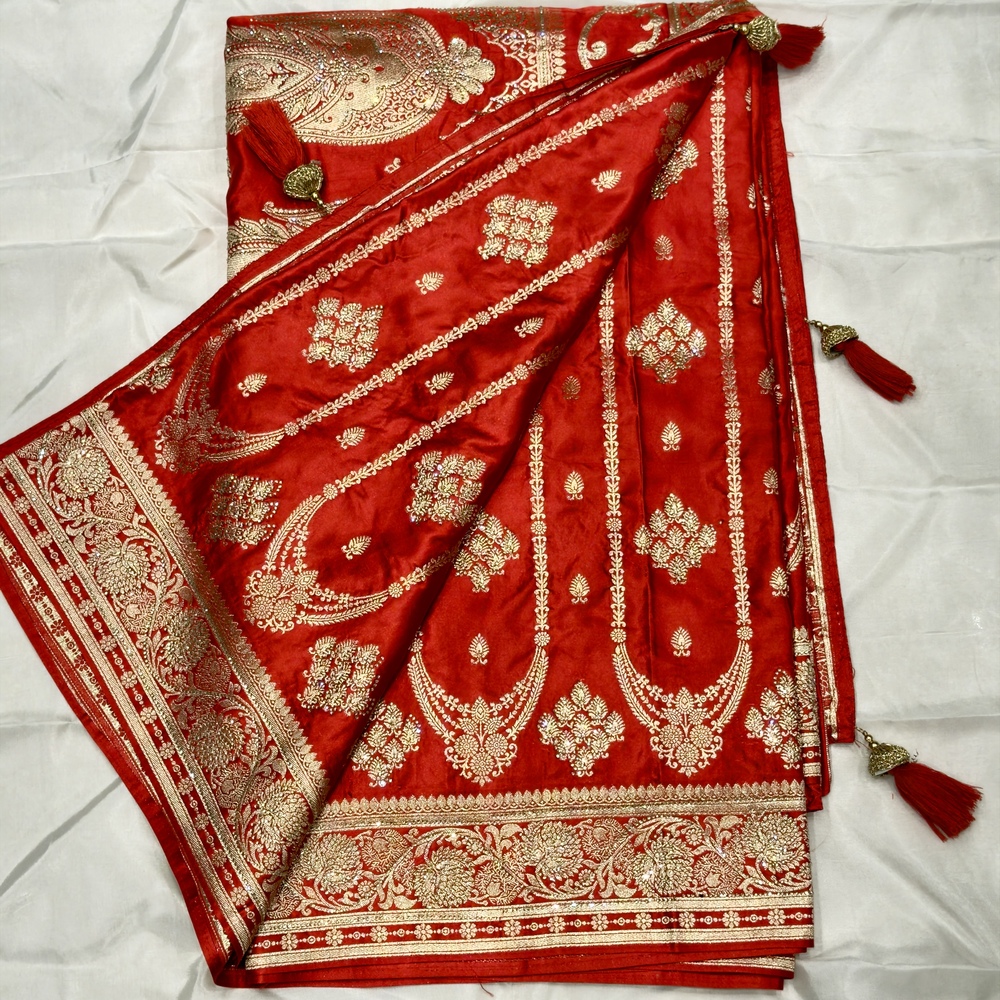
Banarasi sarees come from Varanasi (Banaras) and the villages around it. The craft grew strongly under Mughal patronage, which explains the Persian-inspired floral and foliage patterns you still see today. Weavers here developed the art of weaving gold and silver zari directly into silk, creating that rich, brocade-like surface.
Here’s what goes into a typical Banarasi:
Silk and zari: Fine silk yarn combined with gold or silver-toned zari threads.
Jacquard-style pattern weaving: Raised motifs are woven into the fabric rather than stitched onto it.
Intricate detailing: Patterns like jaal (an all-over net design), buta (small motifs) and kalga-bel (paisley with vines) are all common.
Types of Banarasi You’ll Come Across
Many buyers assume “Banarasi” means one kind of saree. In reality, there’s quite a range:
Katan silk: Pure, twisted silk yarn. The classic, premium choice.
Organza (kora): Sheer, lightweight and very popular for festive wear. Our organza saree online range sits here.
Georgette: Flowy and easy to drape, good for first-time silk buyers.
Shattir: A lighter, more affordable weave with a subtle sheen.
Tanchoi and cutwork: Finer techniques that give distinct textures.
Kanjivaram Saree: The Kanchipuram Story
Kanjivaram sarees, also called Kanchipuram silk sarees, are woven in Kanchipuram, Tamil Nadu. The weaving tradition is closely tied to temple culture, which is why so many designs borrow from temple architecture and mythology: gopuram borders, rudraksha patterns, peacocks, mangoes, lotuses and chequered bodies.
What defines a true Kanjivaram:
Heavier mulberry silk: Thick, lustrous yarn that gives the saree its body.
Korvai (kora) technique: The body and the border are woven separately and then interlocked. This is why you often see a contrast border in a completely different colour.
Rich zari: Traditionally silver thread dipped in gold, though lighter tested zari is widely used today.
How to Spot the Difference Without Checking a Label
Pallu join: In a Kanjivaram, the pallu is often joined to the body, and a faint zigzag line may show where the two meet.
Drape: A Kanjivaram holds its shape and stands slightly away from the body. A Banarasi falls softer.
Motif scale: Kanjivaram designs tend to be bigger and bolder. Banarasi designs tend to be finer and closer together.
Both Carry a Geographical Indication
Both weaves have GI recognition in India, which means the name is protected for sarees genuinely woven in those regions. It’s worth asking your seller about authenticity, and checking for the Silk Mark label on pure silk pieces.
Price Comparison
What Decides the Price of a Silk Saree
Whether it’s Banarasi or Kanjivaram, three things move the price:
Silk quality: Pure silk costs more than blends or art silk.
Zari content: More zari, and real silver zari in particular, pushes the price up sharply.
Weaving time: A heavily detailed saree can take several weeks to a few months on the loom, and that labour is built into the price.
Indicative Price Ranges
These are rough market ranges, not fixed prices. They vary by design, weight, zari and brand.
| Budget Level | Banarasi | Kanjivaram |
|---|---|---|
| Entry (blends, organza, georgette) | From about ₹3,000 | From about ₹6,000 |
| Mid range (pure silk, moderate zari) | ₹10,000 to ₹30,000 | ₹15,000 to ₹40,000 |
| Premium and heirloom | ₹50,000 and above | ₹60,000 and above |
Which One Offers Better Value?
It depends on how you plan to use it.
If you want festive variety on a sensible budget, Banarasi wins. Organza and georgette Banarasis give you the festive look at a much lighter price.
If you’re buying one long-term piece, Kanjivaram often makes more sense. It’s a bigger spend, but it can last decades and keeps its appeal.
A Quick Word on Spotting Overpriced or Suspiciously Cheap Sarees
If a “pure Kanjivaram” is priced far below the market range, something is usually off. It may be a blend, a power-loom imitation or a very light piece sold under a premium name. Ask about fabric composition, request clear close-up photos of the weave and border, and buy from a seller who answers questions directly.
Durability and Occasion-Fit
How Long Will Each Saree Last?
Kanjivaram: Thanks to its thicker silk and interlocked korvai construction, it’s famously long-lived. Many families pass these sarees down through generations.
Banarasi: Pure katan Banarasis also last for many years. Lighter weaves, like organza and fine georgette, need gentler handling because the delicate threads and zari can snag.
Everyday Wear and Handling
A Kanjivaram forgives a lot. It’s sturdy and holds its shape.
A lighter Banarasi needs a little care: avoid rough jewellery near the fabric, and be careful with pins on delicate organza.
Best Occasions for a Banarasi
Diwali evenings, family dinners and card parties
Karwa Chauth and other festive celebrations
Wedding functions, sangeets and receptions
Office or community Diwali events where you want elegance without heaviness
Best Occasions for a Kanjivaram
Lakshmi puja and traditional ceremonies
Weddings, especially as bridal or close-family wear
Temple visits and formal festive gatherings
Any event where you want a statement piece
Comfort Matters More Than You’d Think
Diwali is a long day. You might be cooking, hosting, doing puja, then visiting relatives until late. A heavy Kanjivaram can feel tiring across eight or nine hours. A lighter Banarasi is easier to carry if you’ll be on your feet a lot. If you love Kanjivaram, you could choose a lighter-weight piece or keep it for the puja itself.
How to Style Each Saree for Diwali
Banarasi
Pair with a contrast or brocade blouse in matching zari.
Go for kundan or polki jewellery for a soft, regal look.
Keep the hair simple, a low bun or loose waves, so the saree does the talking.
Kanjivaram
Let the border shine. Use a plain or subtly patterned blouse in a matching or contrasting colour.
Temple jewellery in gold suits it beautifully.
A neat, structured pleat set with a fuller pallu looks best.
Colours That Work Well for Diwali
Reds, maroons, magentas and golds are traditional favourites. Emerald green, royal blue, mustard and deep pink also look rich in festive lighting. Some families avoid black for puja day, so it’s worth checking if that applies to yours.
Which One Photographs Better?
Diwali means photos: family portraits, diya-lit selfies, reels and stories. Both sarees photograph beautifully, but in different ways.
Banarasi on Camera
The fine zari catches the light softly, giving a gentle glow rather than a harsh shine.
Intricate jaal and floral patterns look lovely in close-ups.
Organza Banarasis have a luminous, almost translucent quality that works well in warm lamp-light.
Kanjivaram on Camera
Bold borders and strong contrast make the saree stand out in wide family photos.
The structured drape holds neat pleats, so you look put-together in every frame.
Deep, saturated colours look striking against diyas, rangoli and fairy lights.
Camera Tips That Apply to Both
Mind the lighting: Warm light flatters silk. Direct flash can flatten zari or create glare.
Choose colour with the setting in mind: Jewel tones show up well against traditional backdrops.
Check the fall of the pallu: Ask someone to arrange it before the photo, since that’s often the star of the shot.
The Photo Verdict
For close-up detail and soft glamour, Banarasi usually wins. For group shots where you want impact from a distance, Kanjivaram wins. In practice, colour and fit matter more than the weave itself.
So, Which One Should You Buy?
Here’s a simple way to decide.
Choose a Banarasi Saree If:
You want a lighter, more comfortable saree for long festive evenings.
You’d like more choice in fabric, colour and budget.
You plan to wear it across several occasions this festive season.
Choose a Kanjivaram Saree If:
You’re making a long-term investment in a heirloom piece.
You love bold borders and traditional temple designs.
You’re buying for a wedding or a major family ceremony.
If you’re still undecided, try both on. Feeling the weight and watching the drape in a mirror settles the question faster than any article can. At our Faridabad store, you can see and touch both before choosing. If you’d rather browse from home, take a look at our Banarasi saree online, silk saree and festive sarees online collections.
FAQs
1. Is a Banarasi or Kanjivaram saree better for Diwali?
2. Which is more expensive, Banarasi or Kanjivaram?
3. How can I tell if a Kanjivaram saree is genuine?
4. Which saree is better for a first-time silk buyer?
5. How should I store a silk saree after Diwali?
