
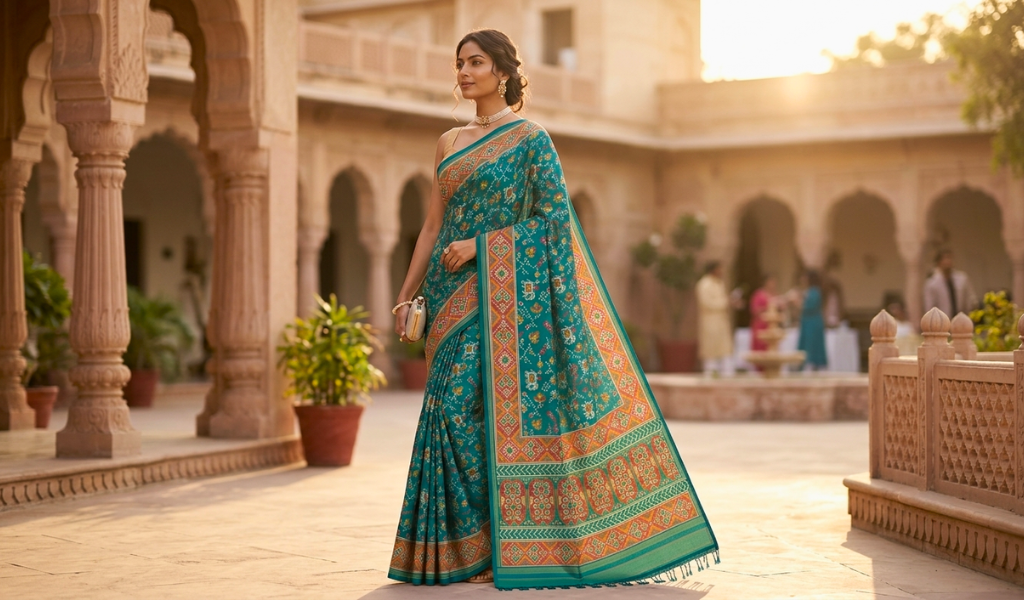
It’s 11 p.m., you’re three reels deep into a saree page, and suddenly there it is: a Banarasi saree online with zari work so rich you can practically hear the loom that made it. Your thumb is already hovering over “Add to Cart”. Before you tap it, though, give yourself two more minutes. A Banarasi saree is not a ₹500 kurti you can shrug off if the fit’s slightly wrong. It’s the saree your daughter might wear to her wedding, the one your mother-in-law has long wanted, or the one she’s talked about for years. So it deserves a bit more scrutiny than your average online order.
This guide walks you through exactly what to check before you order a Banarasi saree online, no jargon, just the things a saree-shopping aunty would tell you if she were sitting next to you.
Why Online Banarasi Shopping Isn’t Quite Like Walking Into a Shop
In Varanasi, a Banarasi saree can take anywhere from a few days to several weeks to weave by hand, depending on the design. That kind of craftsmanship comes with real variation in silk quality, zari type, and price. In a physical shop, you’d run your fingers over three or four sarees before picking one. Online, you’re relying on a photograph and a product description written by someone you’ll never meet. That’s not a reason to avoid shopping online, it’s just a reason to shop a little smarter.
Start With the Fabric, Not the Photo
Every listing should tell you what the saree is actually made of. “Pure silk”, “Katan silk”, “Organza with zari”, and “art silk”, these aren’t interchangeable, and the price difference between them is huge. A lot of budget Banarasi sarees online are silk-blend or georgette with woven zari borders, and there’s absolutely nothing wrong with buying one of these if that’s what fits your budget. The problem is when a listing is vague on purpose. If the description doesn’t mention the fabric clearly, message the seller and ask before you buy.
Zoom In on the Photos, All of Them
One hero shot under studio lighting tells you almost nothing. Look for close-ups of the border, the pallu, and ideally a video of the saree being draped or moved under natural light. Silk catches light differently than polyester, and you can usually tell the difference once you’ve seen a few. If a listing only has one polished image and no close-up of the weave, that’s worth noticing.
Reviews Matter More Than the Product Description
Read what actual buyers wrote, and look for photos they’ve uploaded themselves, not the seller’s studio shots. A saree may look flawless in the listing, but three reviews saying “the colour was duller than shown” tell you something the photos won’t. Buying from a seller with a genuine track record in Banarasi sarees, rather than a random shopfront that popped up in your feed, usually saves you the headache later.
Don’t Skip the Return Policy
The return policy is often the step people overlook when they’re excited, only to regret it later. Check how many days you have to return or exchange the saree, whether the blouse piece has to be unstitched to qualify, and who pays for return shipping. A seller confident in their product will spell the return policy out clearly instead of burying it in fine print.
Blouse, Length, and the Little Details
Most sarees ship with an unstitched blouse piece, but it’s worth checking whether that piece matches the saree’s fabric or is a plain contrast, some are, some aren’t. Standard saree length runs 5.5 to 6.3 metres; confirm this, especially if you’re tall or prefer extra pleats. Check too whether a fall or edging is included, since that affects your tailoring costs and timeline.
If the Price Feels Too Good, Ask Why
Compare a few sarees within the same silk and weave category before deciding. If one “pure silk, heavy zari” saree is priced at half of everything else on the page, either the description is wrong or the zari isn’t what it claims to be. Genuine handloom work costs what it costs, there’s no shortcut around the labour that goes into it.
Delivery Timing, Especially Around Festivals
If you’re buying a Banarasi saree online for a wedding or a festival, order earlier than you think you need to. During Diwali and wedding season, delivery windows stretch, so it’s wise to allow a few extra days in case tailoring is necessary. Good sellers also pack silk carefully, folded properly, not creased into a small box, so check for that in reviews too.
When It’s a Gift, Small Things Count
If this saree is headed to your mother, your sister, or a friend’s wedding shelf, look for sellers offering gift wrapping or a note option. It sounds minor, but unwrapping a well-packed Banarasi saree feels entirely different from tearing open a plastic courier bag, and that first impression matters when the saree itself is meant to be treasured.
The Bottom Line
Buying a Banarasi saree online doesn’t need to feel risky. Check the fabric, actually read the reviews, understand the return policy, and don’t rush past the fine print just because the pallu photographed beautifully. Do that, and there’s a good chance this saree will outlive the trend cycle entirely and end up in someone’s cupboard for the next twenty years.
FAQ’s on Banarasi Saree
How do I know if a Banarasi saree bought online is pure silk?
Is it safe to order a Banarasi saree online for a wedding?
What's a realistic price range for a Banarasi saree online?
Does the blouse piece come stitched or unstitched?
How do I take care of a Banarasi saree after it arrives?