
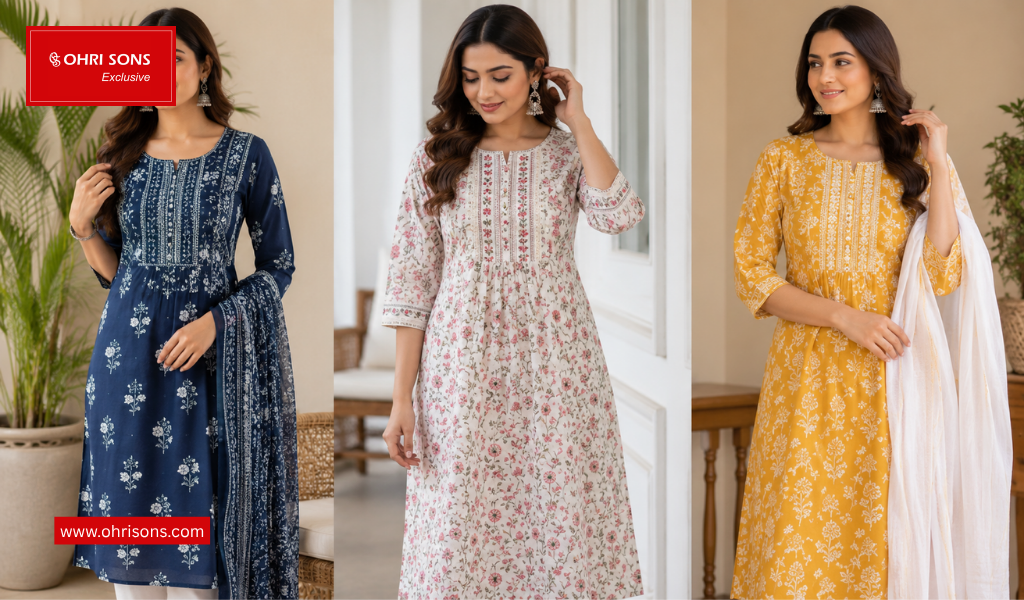
Walk into any wardrobe and you’ll find kurtis in every colour imaginable, but ask most people what fabric they’re wearing, and you’ll get a shrug. That’s a problem, because fabric is the one thing that decides whether your kurti feels comfortable at a summer wedding or leaves you sweating through a family function. If you’re planning to buy designer kurtis online, understanding fabric is more useful than chasing the latest print or neckline trend.
This guide breaks down the most popular kurti fabrics, where they work best, and how to pick the right one without second-guessing your order.
Why Fabric Matters More Than Design
A well-cut kurti in the wrong fabric still feels wrong. Wear georgette on a humid afternoon and you’ll be uncomfortable within the hour. Wear plain cotton to a wedding and you’ll feel underdressed next to everyone in silk. The design catches the eye first, but the fabric is what you actually live in for the next six to eight hours. That’s why a good kurti fabric guide should come before, not after, you start browsing designs.
Cotton: The Everyday Workhorse
Cotton kurtis for summer remain the most practical choice for daily wear, and there’s a simple reason for that. Cotton breathes. It absorbs sweat instead of trapping it against your skin, which is exactly what you want in Indian summers or on days packed with errands, office work, or travel.
Look for pure cotton or cotton blends with a slight stretch if you want ease of movement. Block-printed and hand-embroidered cotton kurtis also work well for casual outings, college, or relaxed weekend brunches. The trade-off is that cotton creases easily and isn’t the first pick for formal or festive settings, but for sheer comfort across a full day, nothing beats it.
Silk: Built for Festive Wear
When the occasion calls for a bit of shine, silk kurtis for festive wear are hard to match. Silk has a natural sheen, a smooth drape, and a weight that makes even a simple design look finished. It photographs well too, which matters if the day involves a lot of pictures.
Pure silk can feel warm, so it’s better suited to cooler months, evening functions, or air-conditioned venues rather than a midday outdoor event in peak summer. If you want the silk look without the heat, raw silk or silk-cotton blends are a practical middle ground. Pair a silk kurti with statement jewellery and it easily becomes your go-to festive outfit without needing a full lehenga.
Georgette: Made for Party Wear
Georgette kurtis for party wear have a flowy, almost weightless quality that makes them ideal for evening events, sangeets, and get-togethers where you’ll be standing, dancing, or moving around a lot. The fabric has a slight sheer quality, which is why georgette kurtis are usually layered over a lining or worn with an inner.
What makes georgette stand out is the movement. Anarkali-style georgette kurtis in particular fall beautifully and add drama without adding bulk. It’s not the fabric for daily wear since it needs more careful handling, but for a party where you want to feel light and look elegant, it does the job better than heavier fabrics.
Chanderi: The Understated Festive Choice
Chanderi kurtis online have quietly become a favourite for people who want festive wear without the heaviness of silk. Originally from Madhya Pradesh, chanderi fabric is known for its sheer texture, subtle shine, and lightweight feel, often woven with gold or silver zari.
It works particularly well for daytime weddings, engagement ceremonies, or festive family functions where you want to look put together without feeling overdressed. Chanderi suits online and chanderi kurtis are often grouped together in ethnic wear collections because the fabric suits both formats equally well.
Handloom: For Occasions That Deserve Something Real
Handloom kurtis for women carry a certain weight beyond fabric, they’re often tied to regional craft traditions, and no two pieces are ever identical. If you’re someone who buys handloom sarees online or already owns handloom suits, extending that into kurtis is a natural next step.
Handloom cotton kurtis are great for everyday wear with a story behind them, while handloom silk versions work for festive occasions where you want something that isn’t mass-produced. They tend to be priced higher, which reflects the time and skill that goes into weaving them by hand rather than on a power loom.
Muslin: Light, Breathable, and Underrated
Muslin kurtis online don’t get talked about as often as cotton or silk, but they deserve more attention. Muslin is finer and lighter than regular cotton, with a soft drape that feels almost weightless against the skin. It’s a good pick for humid weather or for anyone who finds regular cotton too stiff.
Muslin also takes prints and dyes beautifully, which is why you’ll often see it used for pastel and floral kurtis. It’s not the most durable fabric for rough daily wear, but for a comfortable, breathable option that still looks refined, it’s worth adding to your wardrobe.
How to Choose: A Quick Mental Checklist
Instead of picking a kurti fabric based on what’s trending, ask yourself three questions. First, what’s the weather going to be like, humid climates call for cotton or muslin, cooler settings can handle silk or chanderi. Second, how long will you be wearing it, all-day comfort points to cotton, while a few hours at an event opens up silk, georgette, or handloom. Third, what’s the occasion, daily wear leans cotton, festive wear leans silk or chanderi, and party wear leans georgette.
Once you’re clear on these three, browsing designer kurtis for festive occasions or daily wear becomes a lot faster because you’re filtering by fabric first and design second.
Final Thoughts
Fabric is the foundation of how a kurti feels, fits, and photographs, which makes it worth understanding before you add anything to your cart. Whether you’re after cotton kurtis for summer, silk for a festive evening, or handloom for something with more character, knowing the fabric first means fewer returns and more outfits you’ll actually reach for again.
FAQ’s
1. Which fabric is best for kurtis in summer?
2. What fabric is good for festive wear kurtis?
3. Which kurti fabric is best for party wear?
4. Are handloom kurtis worth buying?
5. How do I know which kurti fabric will suit me?